
Mini Cart
One of the most successful sportswear brands in the world, Nike is also one of the most frequently counterfeited. Fake Nike sneakers are widely sold through online stores, social media platforms, and local retailers. Since modern counterfeits can closely resemble authentic products, knowing how to identify Nike original shoes is essential to avoid buying fakes and ensure authenticity.
With this in mind, many customers who are planning to buy a pair of authentic Nike shoes do not know what to look for or how to correctly identify whether the shoe they are considering is indeed an authentic Nike shoe. As such, buyers of Nike shoes must take their time in verifying that they are purchasing authentic Nike shoes before purchasing these products. This will help consumers avoid losing money and ensure that their purchase contains the highest quality comfort, durability, and performance.
Authentic Nike shoes are made to specific standards from high-quality materials; on the other hand, counterfeit Nike shoes typically have lower-quality materials and/or lower levels of safety than their original counterparts. This guide will provide you with a step-by-step process to identify original Nike shoes through several different methods.
Verify the Style Code (SKU Number)
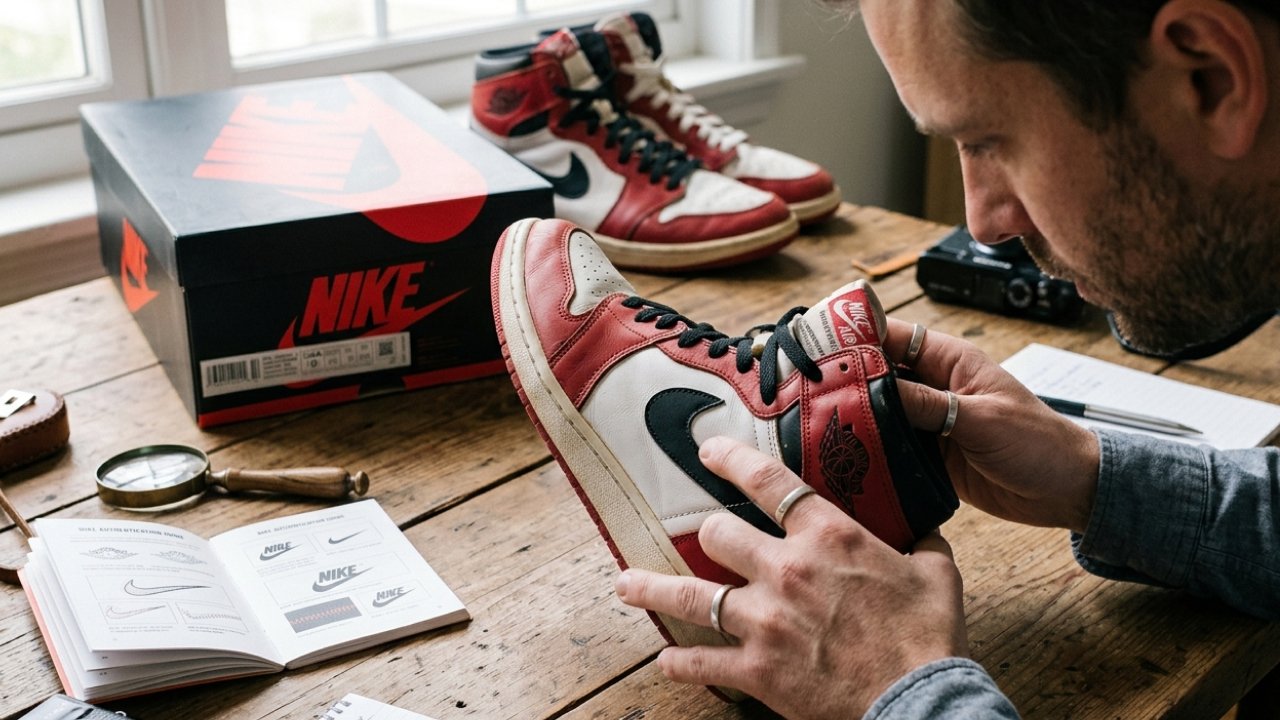
A key component of confirming the authenticity of Nike shoes is verifying all the details.
What is a Nike SKU?
The SKU (Stock Keeping Unit) or style code represents each style and colourway, and is assigned by Nike for full identification of the shoe. Every Nike product, including sneakers and joggers, has a unique SKU that helps verify its authenticity.
Where to Find the SKU
Typically, there are three locations where an SKU may be found:
- Shoe Box Label
- Tongue Label
- Product Receipts and/or Tags
How to Search the SKU Online
Searching for the SKU on Google will yield the following:
- Shoe model
- Colourway
- Images
If everything matches, your shoes are legitimate; If one of the three items does not match your shoe at all, they are most likely counterfeit.
Examples of Authentic Nike Style Codes
- CW2288-111 (Air Force 1 White)
- 554724-092 (Air Max Brand)
Inspect the Shoe Label Inside the Tongue
The shoe’s inside labelling on the tongue will provide significant product identification information to confirm the original product and identify if it’s a real Nike pair of shoes.
Manufacturing Information
The inside tongue label contains important information about the shoe, such as the production date, the name of the shoe model, the shoe’s size, and the shoe’s SKU.
Country of Origin
Nike has multiple factories around the world in places like Vietnam, China, and Indonesia, making these marketing locations legitimate.
Size Chart Details
A true Nike label will include both size conversion (US, UK, EU, CM) formats, which will appear clearly and legibly.
QR Code Verification
Most Nike shoes today have a QR Code sticker on the shoe that links to the product verification process or official Nike pages.
Common Fake Label Mistakes
- Misspelled words
- Poor printing quality
- Incorrect spacing
- Misaligned Swoosh stitching around the label
Examine the Nike Logo Carefully
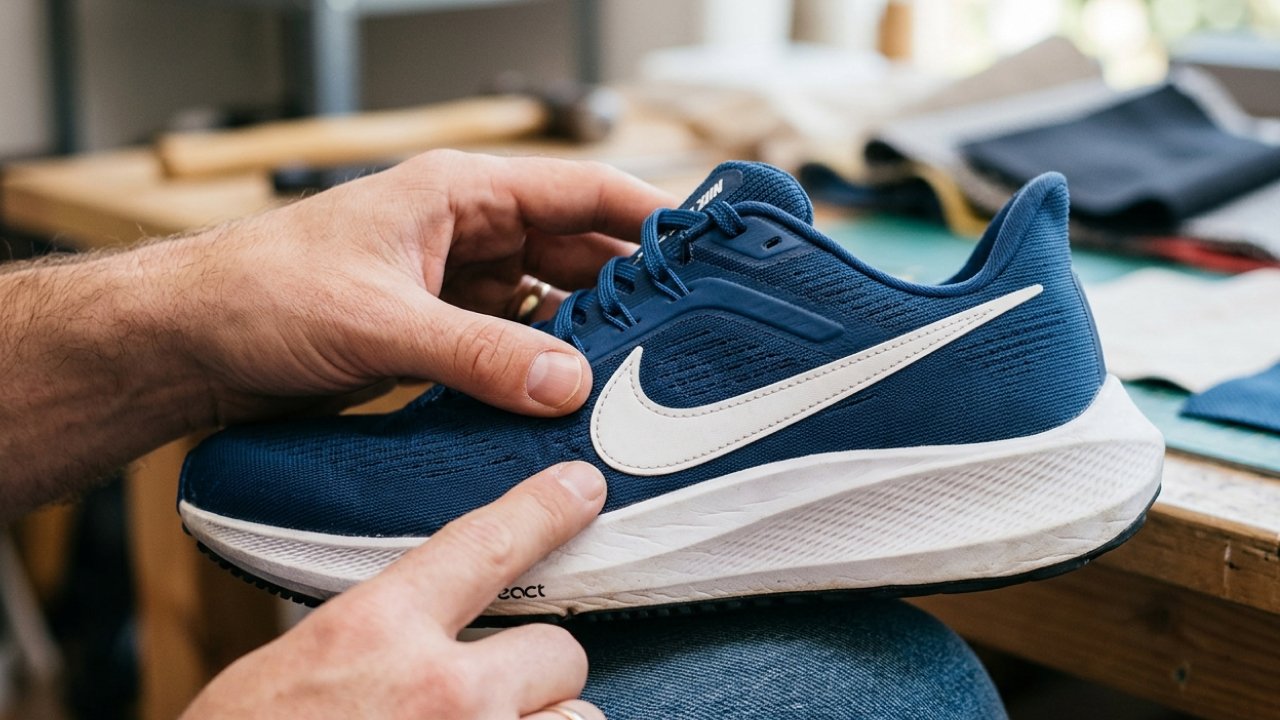
You can identify inconsistencies in Nike logos by inspecting them closely, which typically exposes fake Nike shoes.
Swoosh Shape and Proportions
The Nike Swoosh Curve must be flowing, even, and proportional.
Font Consistency
Nike logos on the tongue, heel, and insole will all be printed in the same or similar style fonts.
Embossed and Printed Logos
Nike sneakers that have embossed logos will be embossed cleanly, and authentic logo prints will have high quality and not be smudged.
Typical Counterfeit Logo Flaws
- Uneven swoosh shape
- Too thick or too thin logo
- Misaligned placement
- Blurry printing
Check Stitching Quality and Craftsmanship
You can find out if the shoe was made to Nike’s specifications or if it’s a cheap imitation by checking the quality of construction (i.e., stitching).
- Uniform Stitching Patterns: Nike has very strict quality control, which guarantees that all shoes have straight, even stitching.
- Thread Quality: Authentic Nike Shoes use high-quality thread that is strong and not likely to fray.
- Excess Glue/Glue Marks: It is normal for there to be some glue; however, excessive amounts of glue on the outside of a shoe indicate bad construction.
- Consistency in Manufacturing: The shoe should feel as though it has been constructed using the same materials and should all be very tightly stitched together with no loose areas.
Analyze the Materials Used
How well a given material aids an athlete’s body fit into the overall quality of the original shoe from Nike. There are 4 basic types of material used:
- Leather Quality: All authentic Nike leather should be soft yet durable & textured in a natural manner (no plasticky feel).
- Knit & Mesh Materials: Breathability and pattern consistency can be found in authentic knitted or mesh materials.
- Midsole/Outsole: Nike uses performance-grade foams & rubber to produce a comfortable and well-made product.
- Flexibility, Balance, and Durability: Original shoes feel equally balanced (in weight), so they have an equal balance of flexibility and weight (not too much weight or too light).
Inspect the Shoe Sole and Traction Pattern
When looking through the outsoles of shoes, a careful examination of the outsole’s traction and design will allow you to see that the outsole was produced using precision, which helps to identify variations that are typical of counterfeit Nike shoes.
Authentic Outsole Design
Nike soles have exact traction designs for athletic performance.
Mold Quality
The moulds used for the original design must be clean and precise.
Texture Details
Every groove and line must be sharp, clean, and consistent.
Signs of Poor Manufacturing
- Blurry designs
- Inconsistent texture
- Flexible or melted rubber appearance
Compare the Left and Right Shoes
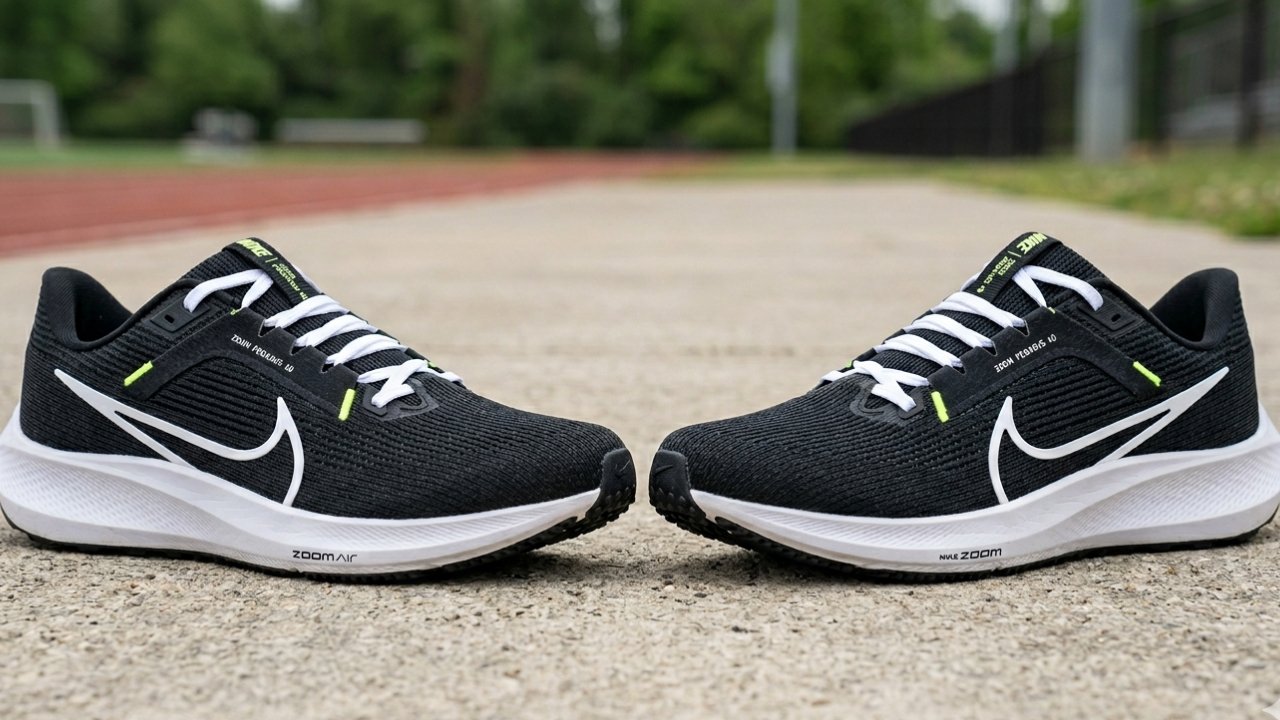
When viewing both pairs of footwear simultaneously, you can identify any inconsistencies or lack of symmetry, which are common with fake Nikes.
- Symmetry: Each individual shoe should appear the same in both shape and size.
- Shape: These three key parts should be identical across each individual shoe – toe box, height of the heel, and overall shape of the shoe.
- Logos: The swoosh logos and all other branding should be perfectly aligned between both pairs of shoes.
- Weight: Both pairs of footwear should feel exactly the same when held in one hand.
Differences may suggest that one of the pairs is not manufactured at a high-quality level.
Check the Weight of the Shoes
Checking the weight of both shoes will give you an idea of inconsistent materials, usually a tell-tale sign of counterfeit production.
- Why Counterfeit Shoes Often Weigh Differently: Counterfeit shoes may be made from low-grade and/or heavier or lighter than genuine shoes.
- Material Differences Affecting Weight: Use of low-grade foam or rubber can change overall weight distribution.
- When Weight Can Indicate a Fake: If one shoe feels significantly heavier/lighter than the other, it could be a fake.
Verify the QR Code and Barcode
Checking a product’s details can be easily done through QR codes and barcodes. However, using only QR codes and barcodes is not enough – always use additional methods of verifying product authenticity to ensure that the product is genuine.
- Where to Find Nike QR Codes: In most cases, QR codes can be found on either the shoe tongue label or the shoe box.
- How QR Codes Should Function: Authentic Nike QR codes will send you to an official Nike product page or verification system.
- Limitations of QR Verification: Because QR codes can easily be duplicated, QR codes cannot be relied upon alone for verification purposes.
Look for Signs of Counterfeit Manufacturing
Counterfeit products often show obvious manufacturing flaws across all types of shoes, including running shoes, trainers, basketball sneakers, and casual joggers. Common warning signs include:
- Misaligned Label
- Incorrect Font
- Uneven Cut
- Strong Chemical Smell
- Inconsistent Shades of Colour
Because counterfeiters lack quality control, these defects are frequently produced in counterfeit products.
Frequently Asked Questions
How can I verify Nike shoes using the SKU number?
Simply match the SKU from the shoe and the shoebox and check online.
Do original Nike shoes have QR codes?
Most newer models do, but not all original Nikes will.
Are Nike shoes made in China authentic?
Nike produces genuine shoes in several different countries, including China.
Can fake Nike shoes have a valid barcode?
Counterfeit Nikes often duplicate legitimate barcodes, so it’s essential to carry out additional verification.
Conclusion
When trying to identify original Nike shoes, there are many different things you should look at, rather than relying on one thing. The most trustworthy ways of authenticating include examining the SKU number, tongue label, quality of stitching, and the overall quality of the materials used.
The best advice is to use as many different verification techniques as possible before making a purchase. If a deal appears too good to be true, it probably is. Always purchase from a reputable dealer or a known seller. Using this guide will greatly reduce your chances of ending up buying fake Nike sneakers and will guarantee that you always receive authentic quality.
