
Mini Cart
Not only is a properly stored shoe collection a way to keep your space tidy, but it can also save time, keep your shoes safe, and allow you to maximise the use of your storage. Learning how to organise shoes properly can completely change how you look after your whole collection – whether you have a small entryway, an overflowing wardrobe, or a large walk-in closet.
This guide takes you through all of the basics: decluttering, categorising, and finding the best storage solutions and maintenance tips, so you can implement a shoe-finding organisation system that will actually stay organised long-term.
Why Organising Shoes Matters
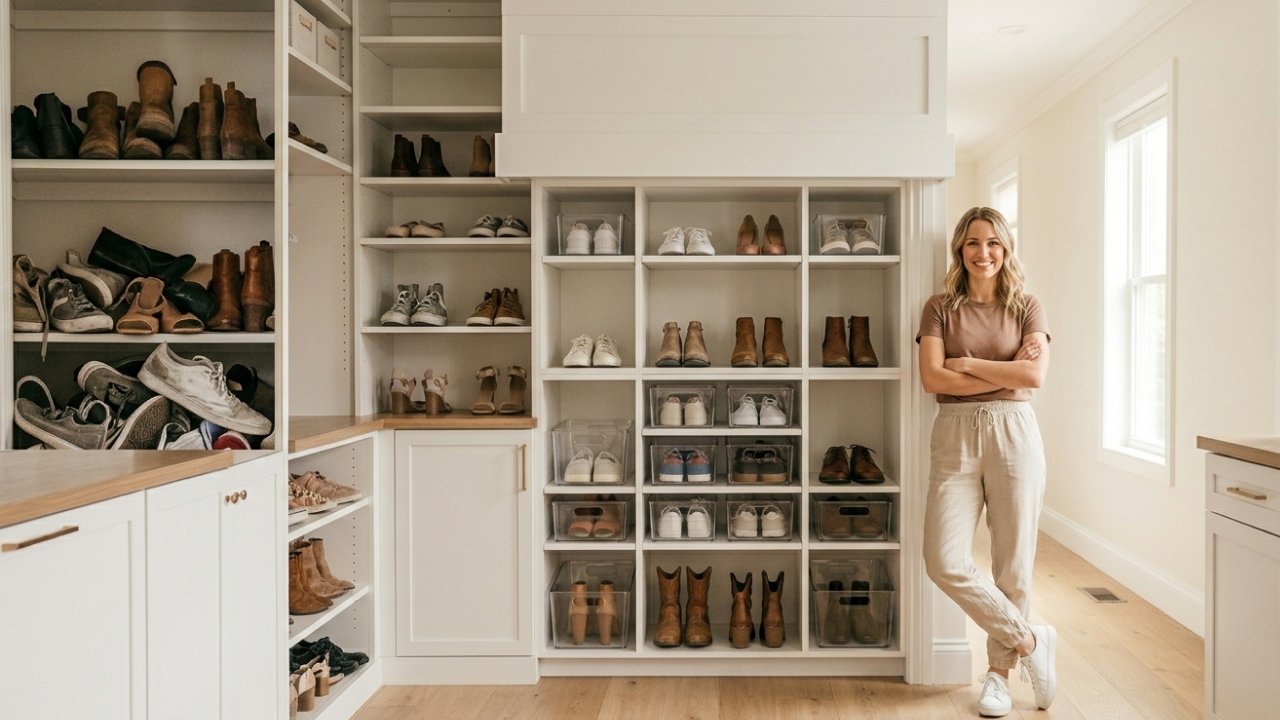
In virtually every household, footwear is one of the items most commonly used but most poorly stored. Without a formalised system of organisation in place, shoes can often be found accumulating at the entrance to your home, underneath your bed, or haphazardly scattered in odd corners throughout the house, making it important to properly organise shoes and take care of your shoes.
When you get your footwear organised, you’ll:
- Reduce daily clutter and visual mess
- Save time each day selecting footwear
- Extend the life of your footwear
- Maximise your available space for storing footwear
- Enhance your home’s level of hygiene and cleanliness
When selecting shoe storage solutions, it is critical to realise that organisation begins with your thoughts and not the furniture or containers you choose to use.
Start with Decluttering Your Shoe Collection
To set up any type of system, you must first eliminate excess belongings. You will have no success with storage if you have too much stuff that you don’t wear.
The Simple Keep–Donate–Discard Method
For each pair of shoes, consider these four questions:
- Do I wear it frequently?
- Is it comfortable?
- Is it in good repair?
- Do they go with my current lifestyle?
Sort Shoes into 3 Groups
- Keep: Must-have shoes that are worn regularly
- Donate/Sell: Shoes in good condition but infrequently worn
- Discard: Shoes that are beyond repair or have no use
Seasonal Filtering
Organise your shoes by season:
- Summer sandals, flip-flops, easy breathable shoes
- Winter boots, enclosed shoes
All professional organisers will agree that decluttering is the most important first step in having a well-organised system.
Categorise Shoes for an Easier System
The next task after sorting out all of your shoes is to categorise what’s left. This will help you when deciding where to keep each category of shoe.
Common Shoe Categories
- Shoes for Everyday Wearing
- Dress or Formal Shoes
- Athletic/Sport Shoes
- Shoes Used for Different Seasons
- Special Occasion or Occasionally Used Shoes
By doing this part of the shoe system, it prevents any problem from occurring by keeping shoes that are used often with shoes that are used less frequently; this is a very common reason that a shoe organisation system has failed.
Choose the Right Shoe Storage System
The ideal method for keeping your shoes organised may vary based on your location, habits, and the number of shoes you own when you properly organise shoes.
Open Storage Systems
An open storage solution would most likely work well if you use your shoes often (for example, you would wear them within a few days of purchasing them).
Examples:
- Shoe rack
- Open shelving systems
- Bench with storage in the entryway
Pros:
- Easy to access and see your items
- Inexpensive ways to keep organised
Cons:
- Messy when not maintained
- Exposed to dust by open shelves
Closed Storage Systems
Concealed storage systems are great for creating a minimalistic and tidy aesthetic.
Examples:
- Shoe cabinets
- Drawers
- Concealed cupboards
Pros:
- Minimalistic Aesthetics
- Protection of Shoes from Dust
- Ideal for Small Spaces
Cons:
- Less Accessible
- Requires a higher level of organisational discipline
Hybrid Storage System (Best Option)
For most homes, the best way to organise your shoes is with a combination of closed and open storage.
- Everyday Shoes: Open Storage
- Seasonal/Average Occasional Shoes: Closed Storage
This allows you to have an organised system that balances ease of use and cleanliness.
Maximise Small Spaces Efficiently
Making the best use of vertical and concealed storage is a necessity if you have limited square footage.
Under-Bed Storage
- Shoes that are worn seasonally
- Shoes that are occasionally worn
Vertical Wall Storage
- Wall mounts
- Floating shelves
- Hanging storage
Behind-the-Door Organisers
- Ideal for apartments or small rooms
- Saves floor space
Stackable Racks
- Adjustable height
- Expandable for growing collections
One of the major trending topics in today’s organising world is optimising small spaces.
Use Practical Shoe Organisers
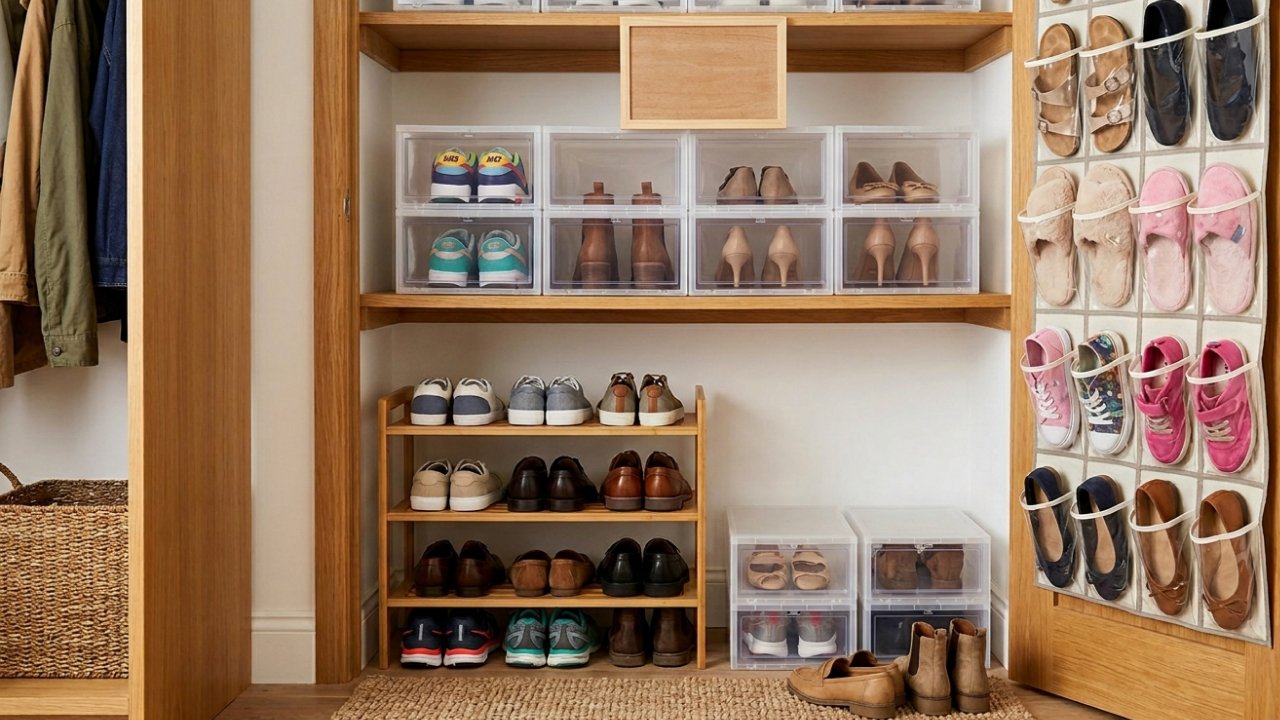
Using the right storage methods can help you improve your shoe collection.
- Clear Shoe Boxes: For easy visibility, you can stack your shoes while providing adequate protection.
- Hanging Organisers: The hanging organiser is another great method to utilise vertical space in your closets, especially for lightweight pairs of shoes.
- Adjustable Shoe Racks: Adjustable racks can accommodate all types of shoes and work well for multiple family members.
- Storage Bins: Bin storage is great for shoes that are out of season, as they help keep your clutter at bay.
Don’t think in terms of how I can buy more shoe storage, but instead choose shoe storage that fits your shoe storage habits and needs.
Organise Your Entryway Efficiently
Your Entryway Wears Your Shoes Daily!
Create a Drop Zone System:
- Just one small rack or bench for the shoes worn daily
- Limit each person to two or four pairs of shoes
- Store regularly worn shoes where they can be reached easily.
Rules for Entryway Organisation:
- No long-term storage at the entry
- Rotate shoes once a week
- Keep your shoes clean after being outdoors.
Utilising your entryway is an excellent way to prevent the spread of clutter to the rest of the home.
Seasonal Shoe Rotation System
One of the best ways to control the number of shoes you own is to use a seasonal rotation.
How It Works:
- Store shoes not being worn this season in bins or boxes
- Store shoes in season, that you are currently wearing, will be kept out
- Every 3-6 months, shoes will be swapped (rotated) so they will be in sync with the seasons.
Benefits:
- Create more room for shoes
- Keep track of where shoes are located.
- Minimise any additional wear on shoes.
Many professional organisers have implemented this system as part of their long-term maintenance solution.
Creative & Aesthetic Shoe Storage Ideas
Your shoe storage does not need to be dull. You can include it in your home décor through fun ideas like: Displaying sneakers on walls as decor, using open shelving, adding decorative baskets to store shoes (out of sight), and sorting shoes by color for harmony of style. When shoes are displayed in an aesthetically pleasing manner, they can improve your overall home design instead of interfering with it.
Maintenance – Keeping Shoes Organised Long-Term
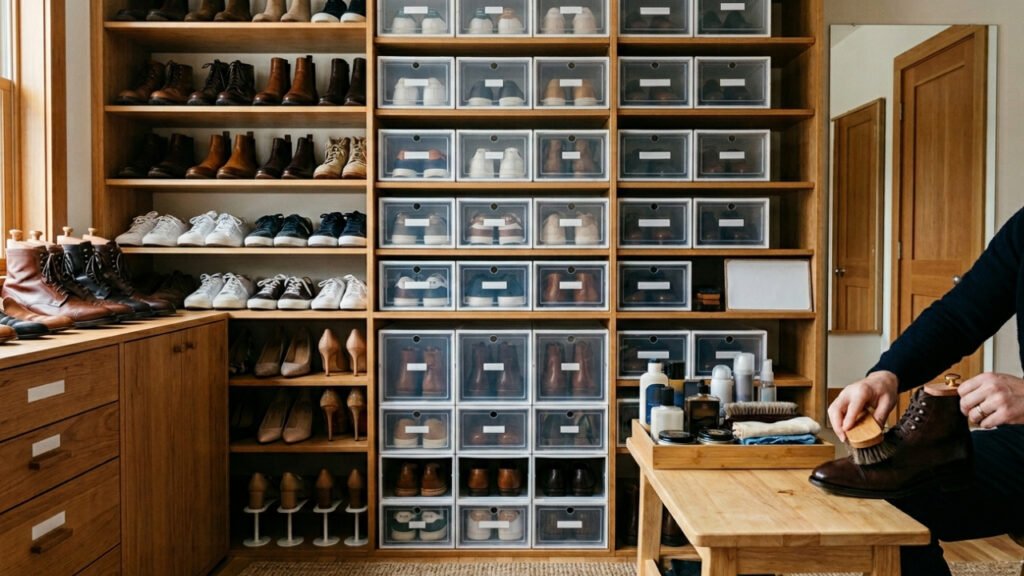
People’s most prominent mistake is to organise their system only once, then never maintain it again.
Weekly Responsibilities:
- Put away shoes in their designated areas
- Clean up muddy shoes
- If you have seasonal shoes, rotate them out to store correctly.
Monthly Responsibilities:
- Review the footwear you haven’t worn lately.
- Reorganize if necessary
- Clean storage areas.
Maintaining an organised system over time requires you to maintain it consistently.
Common Shoe Organisation Mistakes
Avoiding the errors below will assist you in keeping your system as effective as possible:
- Having a plethora of unused footwear
- Obtaining storage before purging
- Combining seasonal footwear
- Neglecting to utilize vertical space
- Complicating your system
When it comes to systems, simple is always better than complicated.
Best Shoe Organisation System Summary
An easy way to summarize the types of organised storage spaces
- Small – Utilize vertical and/or under-bed space as storage
- Large – Use closed cabinets or open racking to store things
- Families – Can use a hybrid type of system where each family member has an “individual” section by category
- Minimalists – Prefer closed storage with strict rules on how to de-clutter.
An organized space means being able to maintain that organisation easily!
Final Thoughts
A good shoe organisation system helps you save time, reduces clutter, improves accessibility, and allows for easy upkeep when you properly organise shoes. By learning how to declutter, categorize, and appropriately store shoes, you will find maintaining them simple. When the shoe organization is done thoroughly, even an average-sized space can look tidy, functional, and well-organised.
You Might Like to Read:
