
Mini Cart
Choosing the right shoe fitting is an important aspect of preventing pain in the feet, improving your posture, and allowing you to perform at your best when wearing your footwear. Many individuals in Pakistan still use random or outdated sizing systems instead of taking the time to measure shoe size accurately, which often leads to wearing shoes that are too small or too large and very uncomfortable.
The following guide will assist with measuring your foot length at home accurately, provide an explanation of the different shoe sizing charts, and explain the best way to fit into each style of shoe available. It does not matter if you need a pair of everyday sneakers or a great performance shoe from SneakerShoes.pk; this guide will help you choose the correct fit for your particular needs.
Why Measuring Your Foot Size Matters
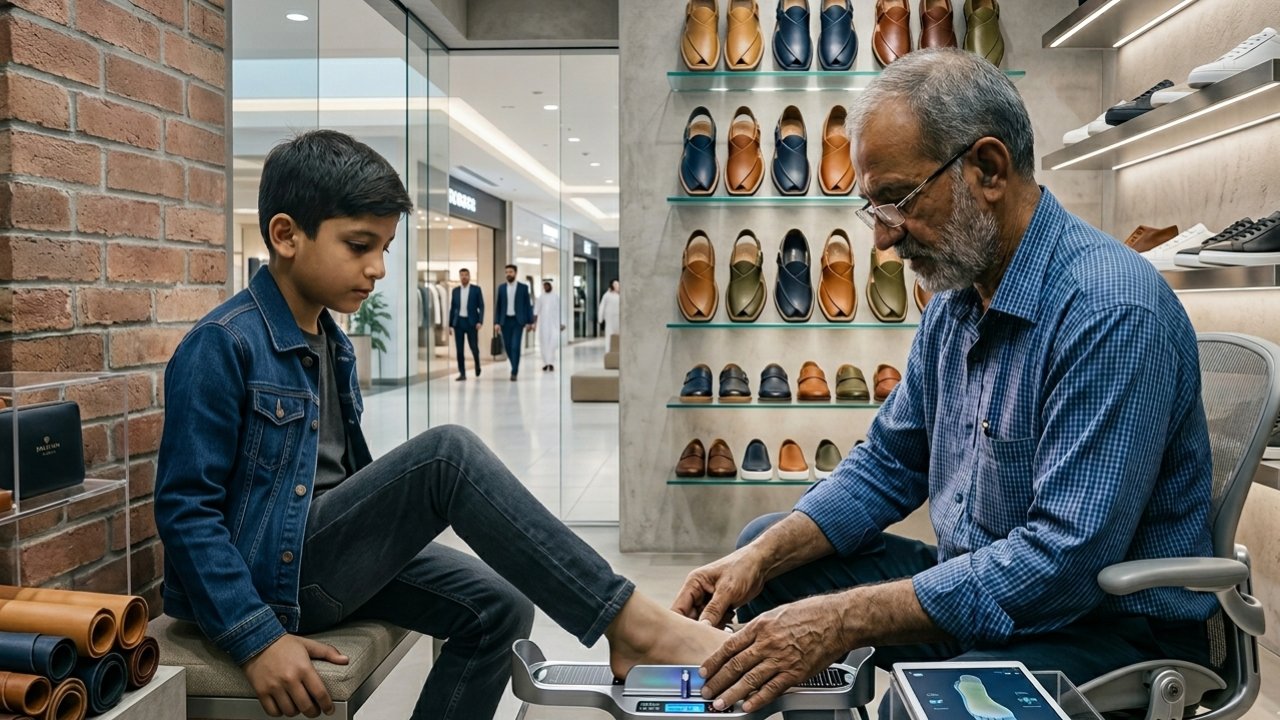
While it may surprise you, many people in Pakistan wear shoes that don’t fit properly, and this is a major contributor to foot-related issues. Many research studies conducted through the years indicate a significant percentage of people wear the wrong shoe size without realizing it, resulting in negative effects on posture, performance, and the general health of their feet.
To guarantee your sneakers, running shoes, or casual shoes fit correctly when you order online from SneakerShoes.pk, accurate measuring of your feet will ensure they’ll fit correctly. Finding your true size will provide you with greater comfort, better durability, and better overall performance, which is particularly critical if you lead an active lifestyle.
In conclusion, if you measure your feet properly, you’ll be much more comfortable and perform better than if you do not.
What You Need to Measure Your Shoe Size at Home
To measure your shoe size at home, just gather the items you need to measure your foot quickly and easily:
- Paper (preferably A4 or printer paper).
- Ruler or measuring tape.
- Pencil/pen to mark the paper.
- Flat wall (for leaning your foot against).
- Socks (the type of sock that you intend to wear with the shoes).
You may want some tape to hold the paper down while you measure your foot so it does not slip off the wall or move around while you measure.
If you have the right setup when measuring your foot, then you can ensure everyone is accurately measuring their foot correctly.
How to Check Your Shoe Measurement at Home
1. Collect Your Supplies and Prepare the Area to Trace Your Foot
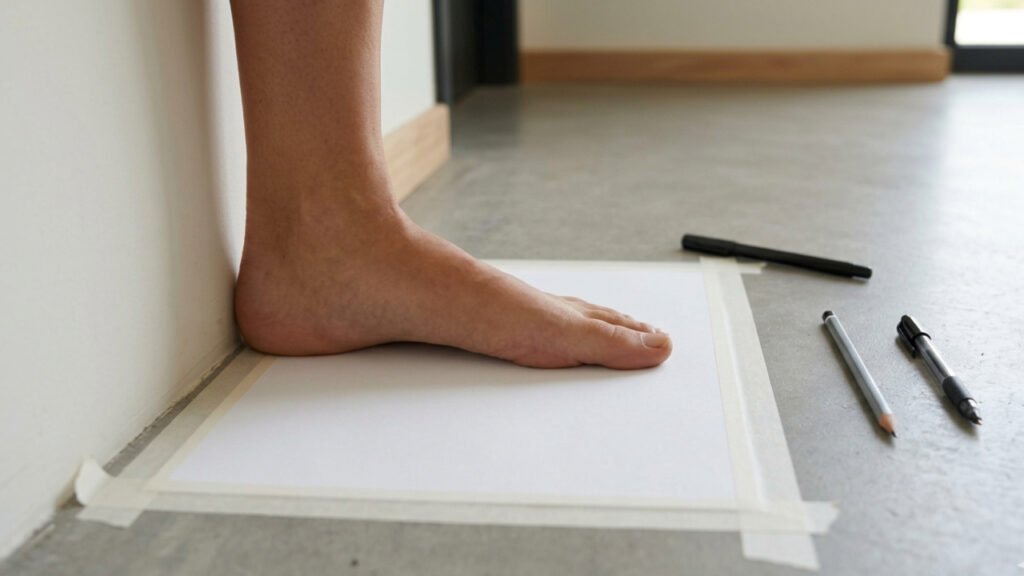
Use a hard surface and a piece of paper that can remain still (you may need to use tape) against a wall. i.e., If you need to use socks when wearing shoes, please wear them when tracing your foot.
2. Trace Your Feet Accurately
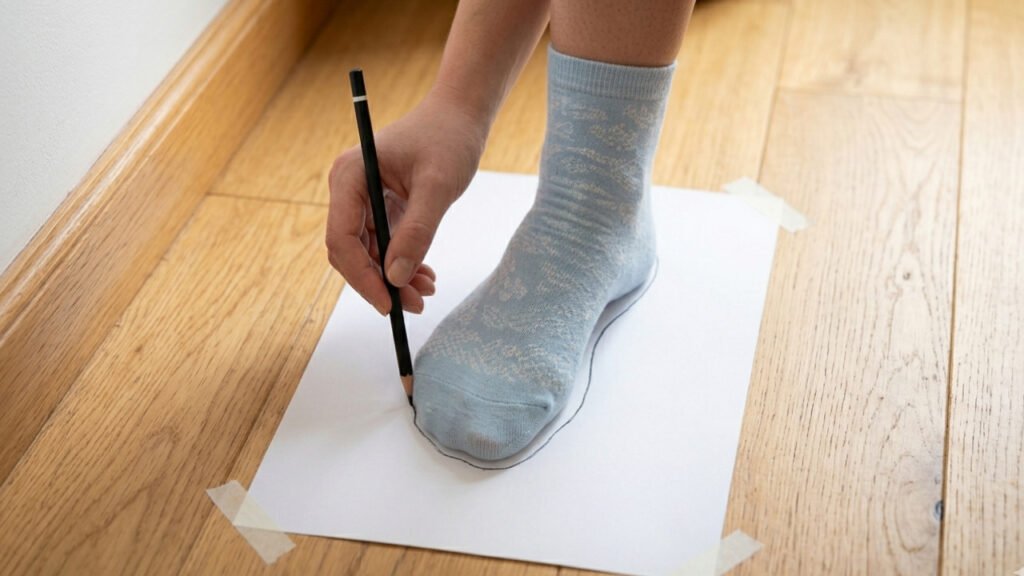
While still standing straight and against the wall, place your heel against the edge of the paper. Be sure to distribute your weight evenly so the entire foot is accounted for when drawing and using a vertical pencil.
3. Measure Feet for Length
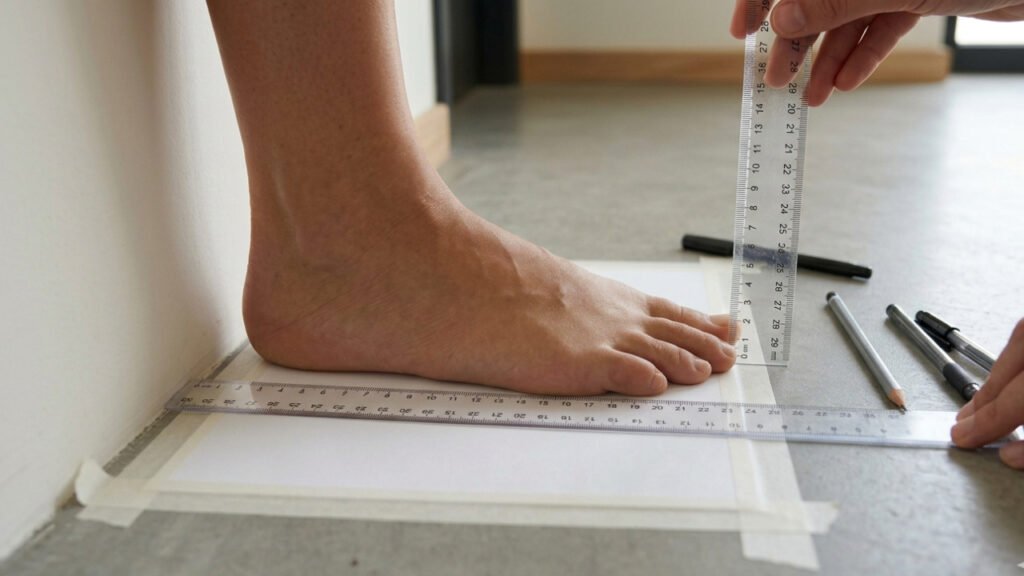
Using a ruler, measure from the back (heel) of your foot to the front (tip of your longest toe) to obtain your foot’s length measurement.
4. Measure Foot for Width
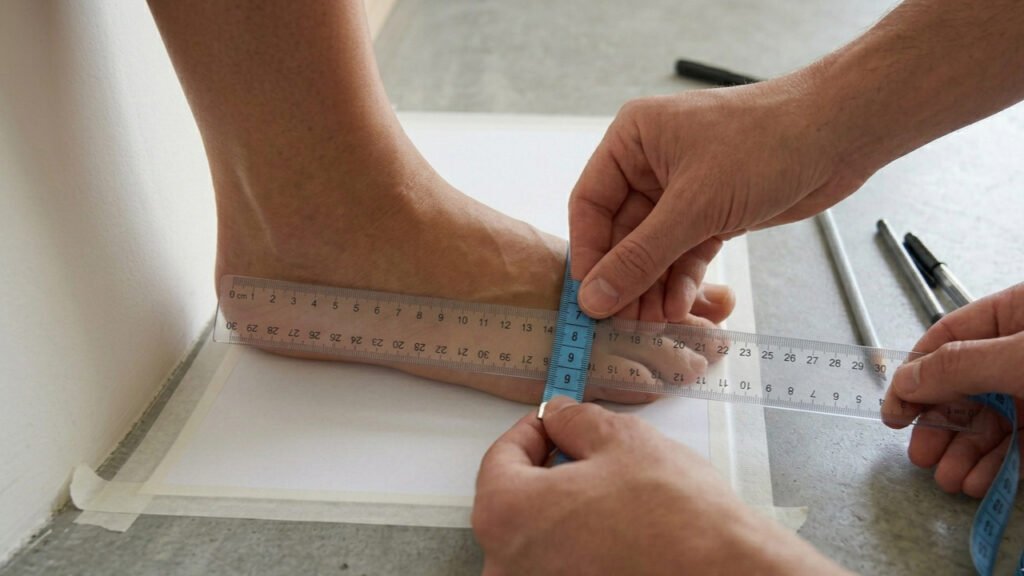
Measure across the widest part of your foot (the ball) using a tape measure. This information is very important for the proper fit of your shoes and to obtain the correct shoe fitting.
5. Measure Both Feet
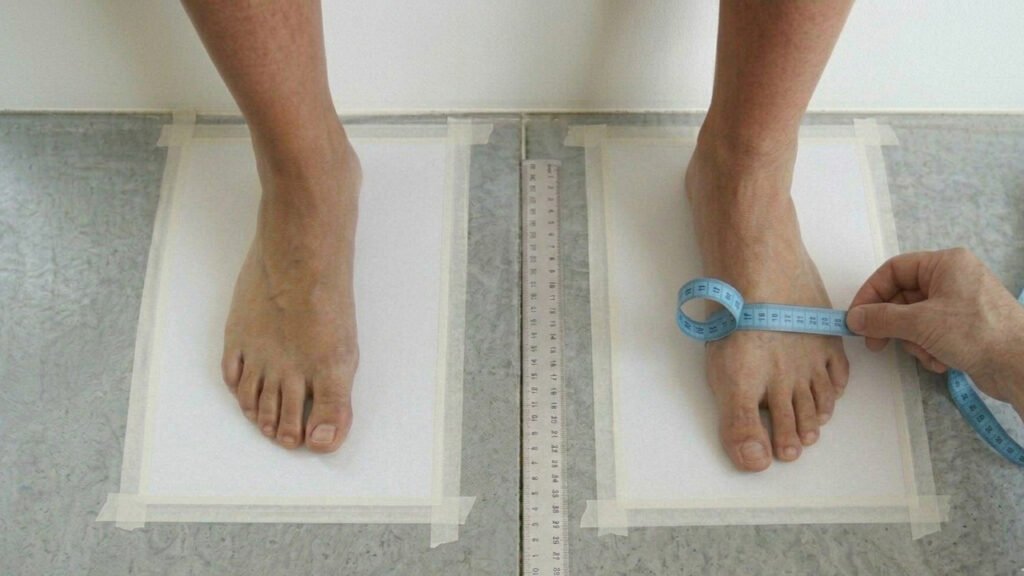
Use the same process as described above for the second foot. If one foot is larger than the other, always use the larger of the two dimensions when fitting shoes.
Size Chart (Men, Women, Kids)
Once you have your foot length, compare it to a size chart to find your correct size.
| Foot Length (cm) | UK / PK Size | US Size | EU Size |
| 24.5 cm | 6 | 7 | 40 |
| 25.5 cm | 7 | 8 | 41 |
| 26.5 cm | 8 | 9 | 42 |
Always check the size guide at SneakerShoes.pk, as sizing may vary slightly depending on the brand.
How to Measure Foot Width (Most Ignored Factor)
The width of feet influences the comfort level of footwear. While most people measure their foot length accurately, many forget about the width of their feet and purchase footwear based solely on foot length.
To determine your foot width, measure the widest part of your foot and refer to one of the width charts (narrow, standard, or wide). If your foot width is wider/greater than the standard width, choose shoes that have a wide fit. If your shoes are feeling tight on the sides, your problem may be due to width rather than length.
Pro Tips for Accurate Shoe Measurement
Here are some expert tips for obtaining an accurate measurement of your foot:
- Measure your foot at the end of the day, when your feet will have swollen.
- Measure your foot standing, rather than sitting.
- Use the same size of socks as you would wear with the shoes to measure your foot.
- You should take your foot measurements based on the larger of your two feet.
- When you trace your foot, make sure that the pencil stays straight.
These tiny details can create a difference in the fit of your shoes
How to Know If Your Sneaker Fit Properly
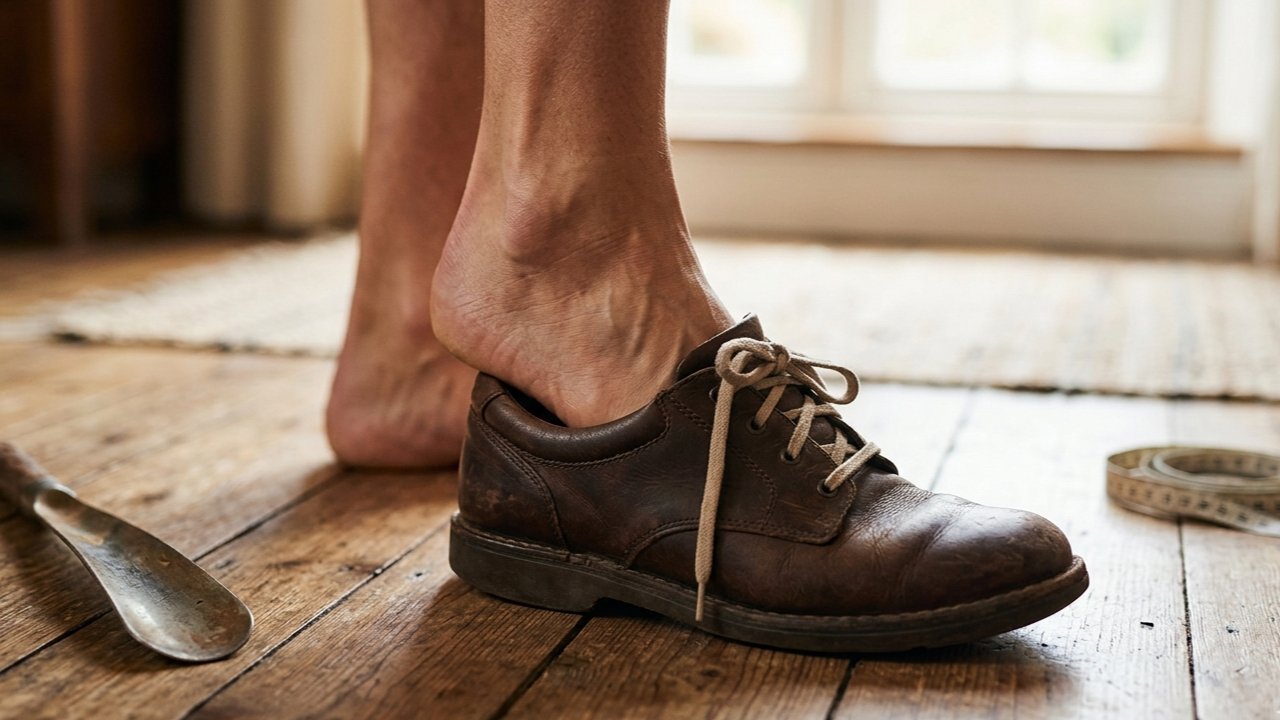
Once you have measured, you also need to ensure that your shoes fit properly.
- You should have some wiggle room for your toes
- The front of your shoe should have about a thumb’s width gap in front of your toes
- Your heel should not slip out of the back of the shoe as you walk
- The shoe should fit snugly on your foot, but not be tight
- The arch support of the shoe should match the curve of your foot
If any of the above seem out of line, try adjusting the size or width of the shoe.
Shoe Fit Guide by Type
- Running Shoes: Should fit snug with extra space in the toe area. A good fit will help you to avoid getting injured while you’re in motion.
- Walking Shoes: Must have more space for toes to be comfortable when walking long distances.
- Sneakers: Contain the right amount of support with respect to comfort and style (swing a little looser but give you good support).
- Boots: Use thicker socks with boots, and use an extra space from the sock without being too loose.
Correct fit type selection is critical when shopping for shoes at SneakerShoes.pk.
Men vs Women vs Kids Shoe Size Differences
Shoe fitting varies across each category:
- Women’s will typically be one to one-and-a-half sizes larger than men’s.
- Children’s feet grow quickly and will require frequent measuring.
- Some brands provide a unisex size.
Check the appropriate category before making your purchase every time.
How Often Should You Measure Your Feet?
Foot size can vary depending on several factors, such as age, weight, and lifestyle changes.
Measuring Frequency:
- Adolescents: Once every year
- Children: Every six to eight weeks
- Athletes: More often, depending on how hard they exercise.
Regular measurement will provide consistent comfort.
Frequently Asked Questions
Q: How do I measure my shoe size in cm?
Using a ruler, measure from the heel of your foot to the longest toe and then compare that measurement to a sizing chart.
Q: What if one foot is bigger?
Always choose your shoe size based on the measurement of your larger foot.
Q: How much extra space should shoes have?
A thumb width at the front of your shoes is considered an ideal amount of extra space in your shoes.
Q: Can shoe size change over time?
Yes, shoes may become larger or smaller depending on how old you are, how much you weigh, or how much physical activity you engage in.
Q: Can I measure shoe size without tracing?
While you can get a good estimate of your foot size without tracing, tracing will provide a more accurate result.
Conclusion
Having the right shoe size is crucial for long-term comfort, athletic performance, and properly functioning shoes. This guide’s tips will help you make sure you are measuring yourself accurately so you do not buy the wrong size when shopping for a pair of shoes.
After measuring yourself, come visit us at SneakerShoes.pk in Pakistan and see what new styles are available to complete your look with the perfect fitting pair of shoes.
